
About the Conference
This conference aims to provide an annual platform to academic scholars who study dharma to come together and discuss their work in India. These scholars can be located in a wide range of disciplines—from English and Comparative Literature to Philosophy and Linguistics, from History and Sociology to Anthropology and Economics, from Cinema and Media Studies to Political Science and Religious Studies. Their methodological emphases can also be wide ranging—from Textual Analysis and Field Studies to Culture Studies, Digital and Statistical Analysis. Orientations of their enquiries may also be diverse—from concentrations on gender and caste to focus on ecology and popular culture. The conference is primarily aimed at scholars who work in the Indian academia. Having said that, it is warmly open to International scholars who work on South Asia. What unites the conference is the scholars’ engagement with dharma, with the Hindu, Buddhist, Jain and Sikh traditions.
A subfield of Religious Studies, Dharma Studies promotes critical, grounded as well as constructive enquiries into the Indic religious traditions, their histories, literatures, discursive as well material cultures, philosophies, rituals, music and dance. As we conceptualize the field, three core concerns stand out. First, the field is about the Indic life world the dharmic traditions constitute and share among themselves. Sensitive enquiries into this life world need to take into account both the long inheritances as well as evolutions. They also need to pay careful attention to the relationships between the dharmic traditions, their affinities and differences. Instead of positioning one against the other we are more interested to explore what they share, and enable dialogues between them. Second, this Indic life world acquired its modern forms and practices in the midst of other unfolding historical processes such as European colonialism as well as global capitalism. Hence, the interface between dharmic traditions, and European colonialism and global capitalism constitutes a central concern for our work. Third, we see the field particularly concerned with methods and languages. Training in standard academic methods of studying religion is essential for fruitful engagement with Indic traditions. So is competency in Indian classical and vernacular languages. Having said that, we believe, a comparative awareness of how methods and languages are employed in other sub-fields of religious studies, Jewish studies or Islamic studies for instance, helps in reflecting on their usage vis-à-vis Indic traditions. At the same time, we remain open to questions about limitations of available methods or necessity of evolving more specific theoretical models as regards the study of Indic religions.
The conference invites papers on four principal themes. ‘Social Justice and Dharmic Traditions,’ and ‘Gender Justice and Dharmic Traditions,’ constitute the first two. Our broad aim is to enquire into how the concept of justice is discussed in Dharmic Traditions and how Dharmic Traditions can provide conceptual and practice-based resources to argue for Social and Gender Justice. ‘Historiography of Dharma’ and ‘Institutions of Dharma’ are the two other principal themes. As regards the historiography of dharma, the aim is to see how Dharmic traditions are studied in Indian academia after independence—that is, to historicise their presence or absence in Indian history and other departments. As far as the institutions of dharma are concerned, we are interested to explore the principal institutions including temples, monasteries, printing presses, book shops, lending libraries, and digital platforms that have shouldered the responsibility of keeping dharmic traditions alive and available to the Indian public.
Moving beyond the four ‘Themes in Focus,’ the conference invites papers in a wide range of areas including but not confined to:
| Indian Epics and their Retellings | Dharma and Aesthetics |
| Visual Media and Dharmic Traditions | Dharma and Medical Humanities |
| Dharma and Ecology | Material Cultures of Dharmic Traditions |
| Music and Dance in Dharmic Traditions | Archaeology of Dharmic Sites |
| Life Histories of katha-vachaks, bhajan-singers, and artistes | Geography and Dharma |
| Dharmic Periodicals and their Publics | Economic Histories of Dharmic Institutions |
| Dharma and Digital Communities | Dharmic Traditions and Diaspora |
| Histories of Family Worship | Dharma and Translation Studies |
| Accounts of Deities and Temples | Dharmic Institutions and Economic Outcomes |
| Animals and Dharmic Traditions | Sustainable Life and Dharmic Traditions |
| Disability and Dharmic Narratives | Dharma and Food History |
| Charity and Dharmic Traditions | Dharma and Consciousness Studies |
| Dharma and the Market | Dharma, Ayurveda and Healing |
| Manuscript Cultures | Dharma in the Age of AI |
| Pilgrimage Narratives | Dharma and Intellectual Property Rights |
| Interfaith Dialogues | Dharma and Legal Studies |
Program & Schedule
Will be Updated shortly
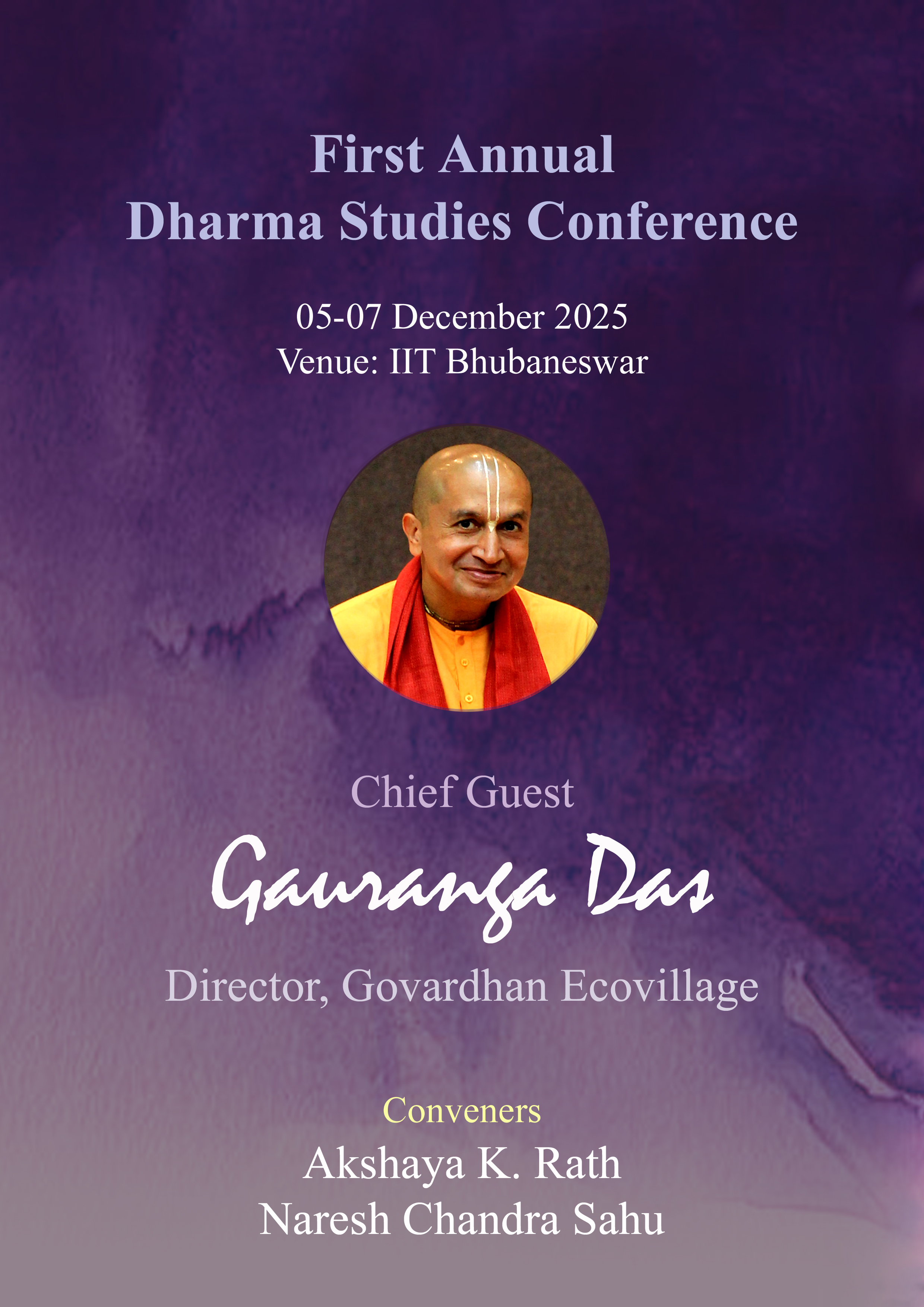
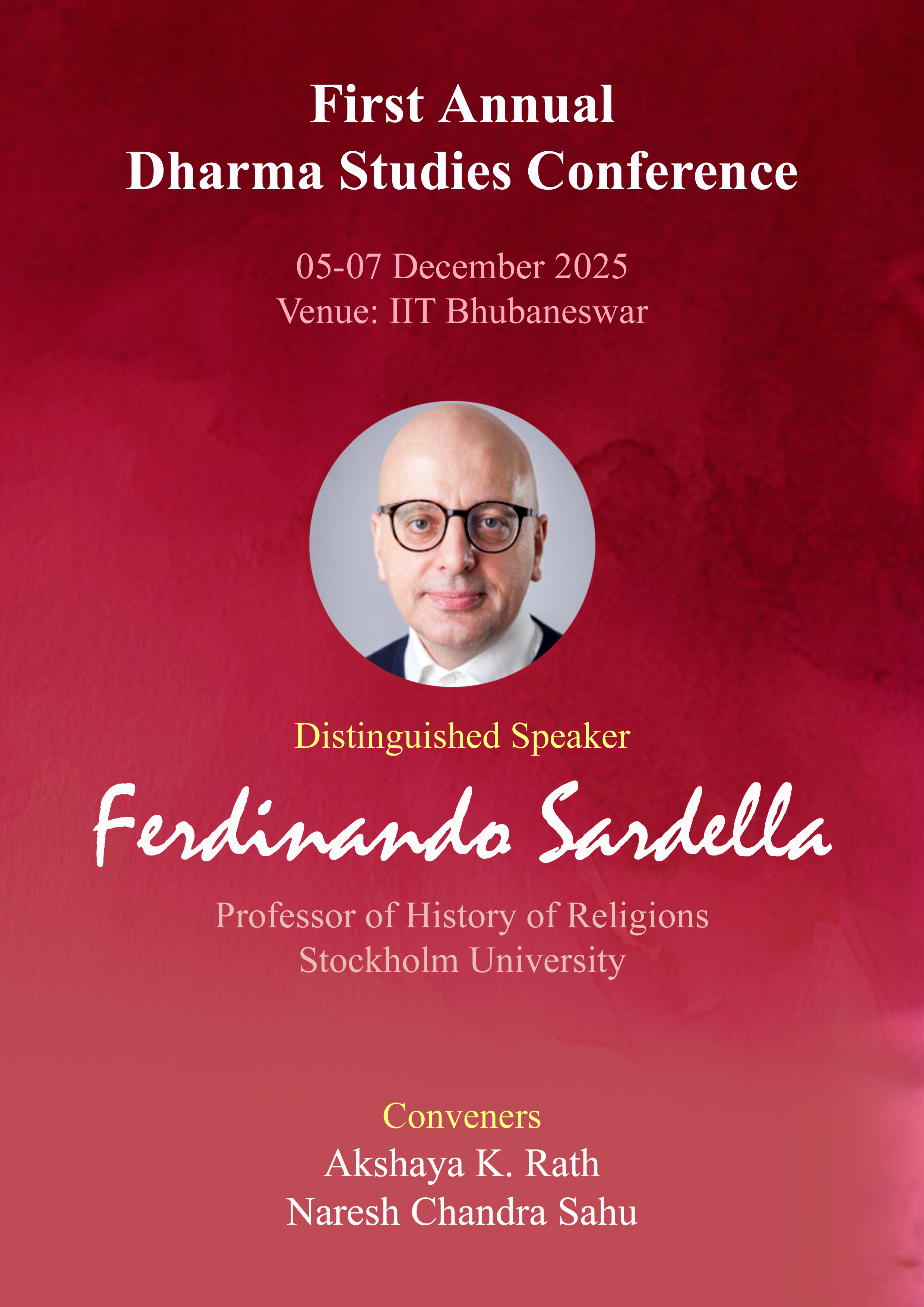
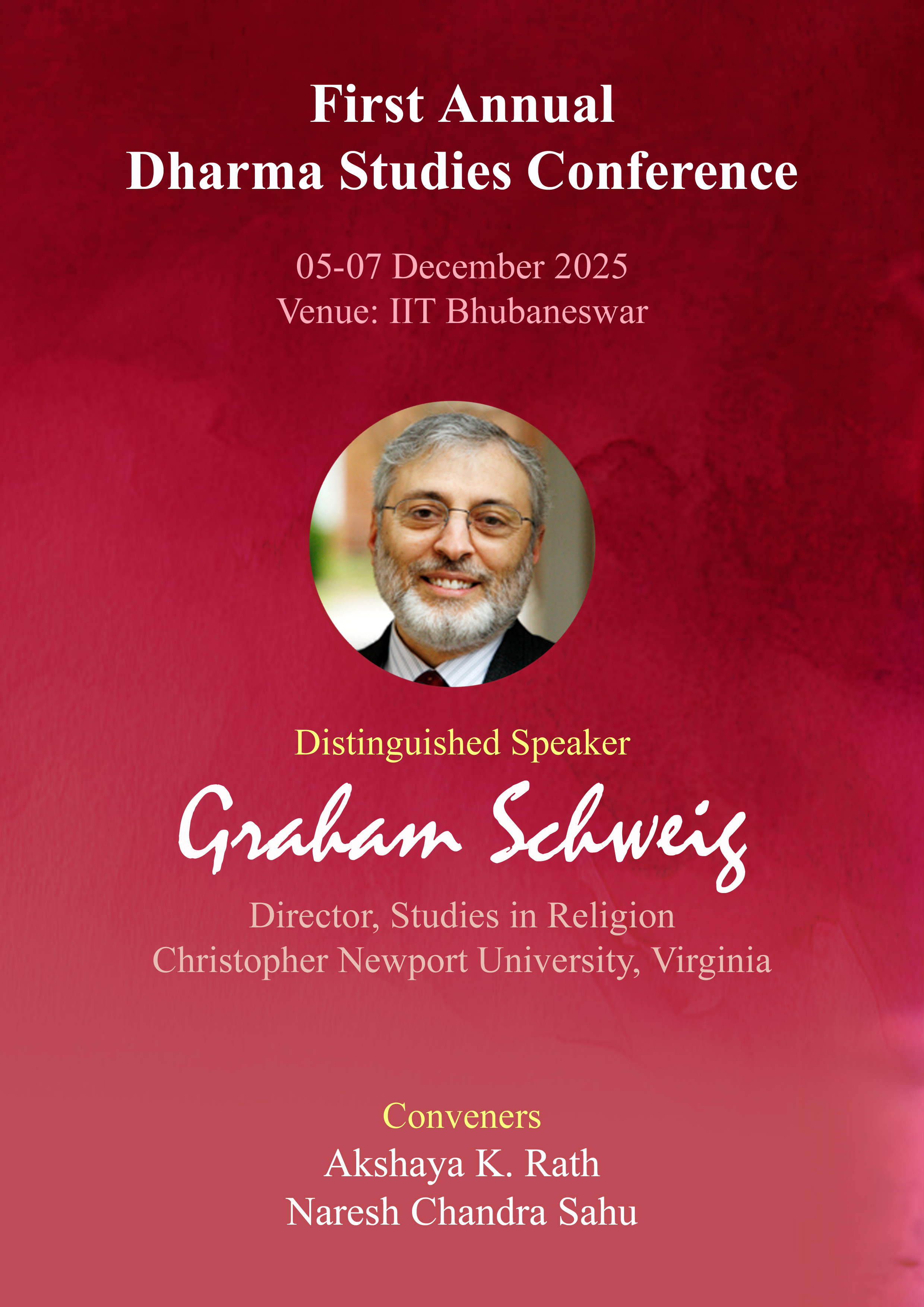
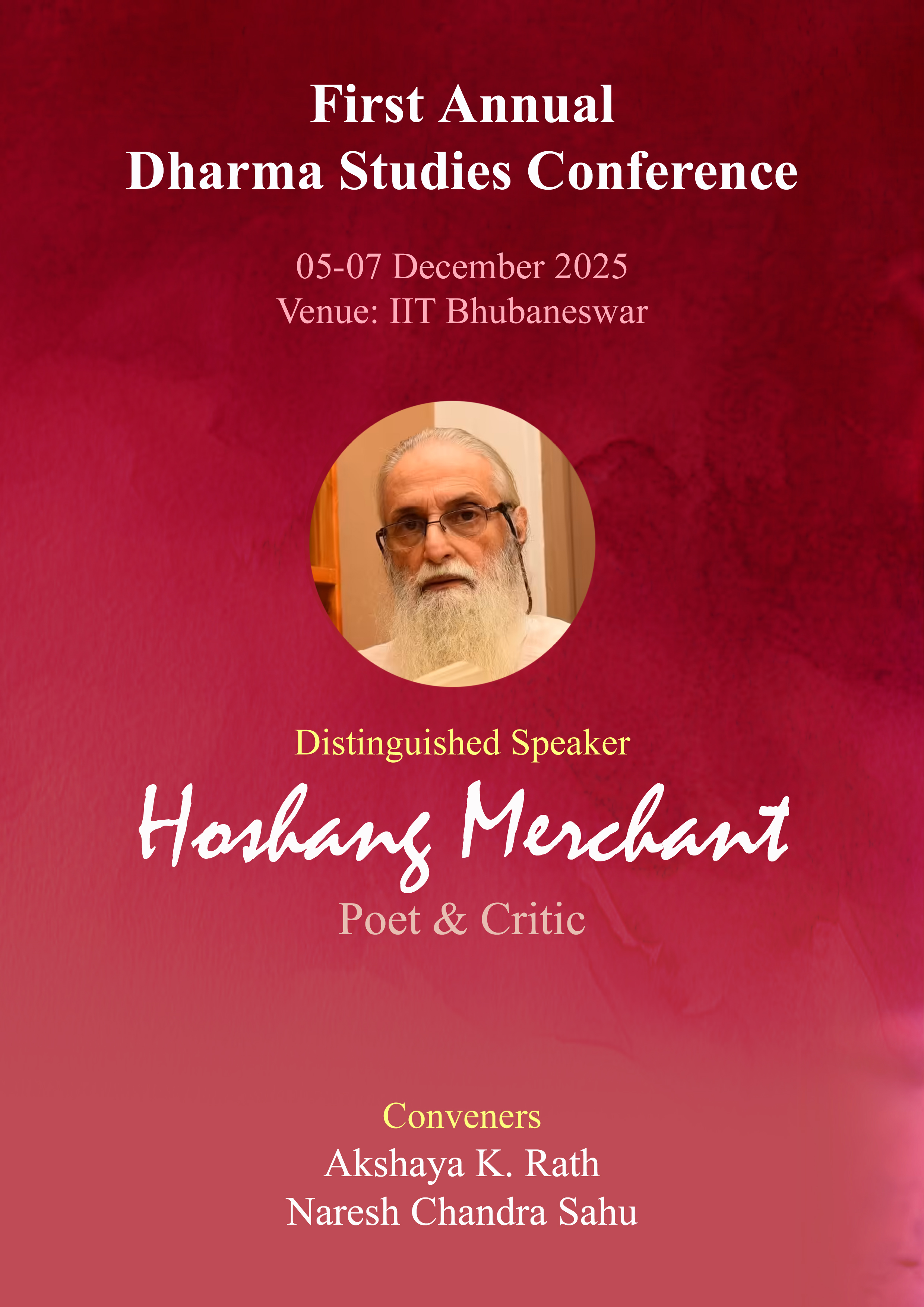
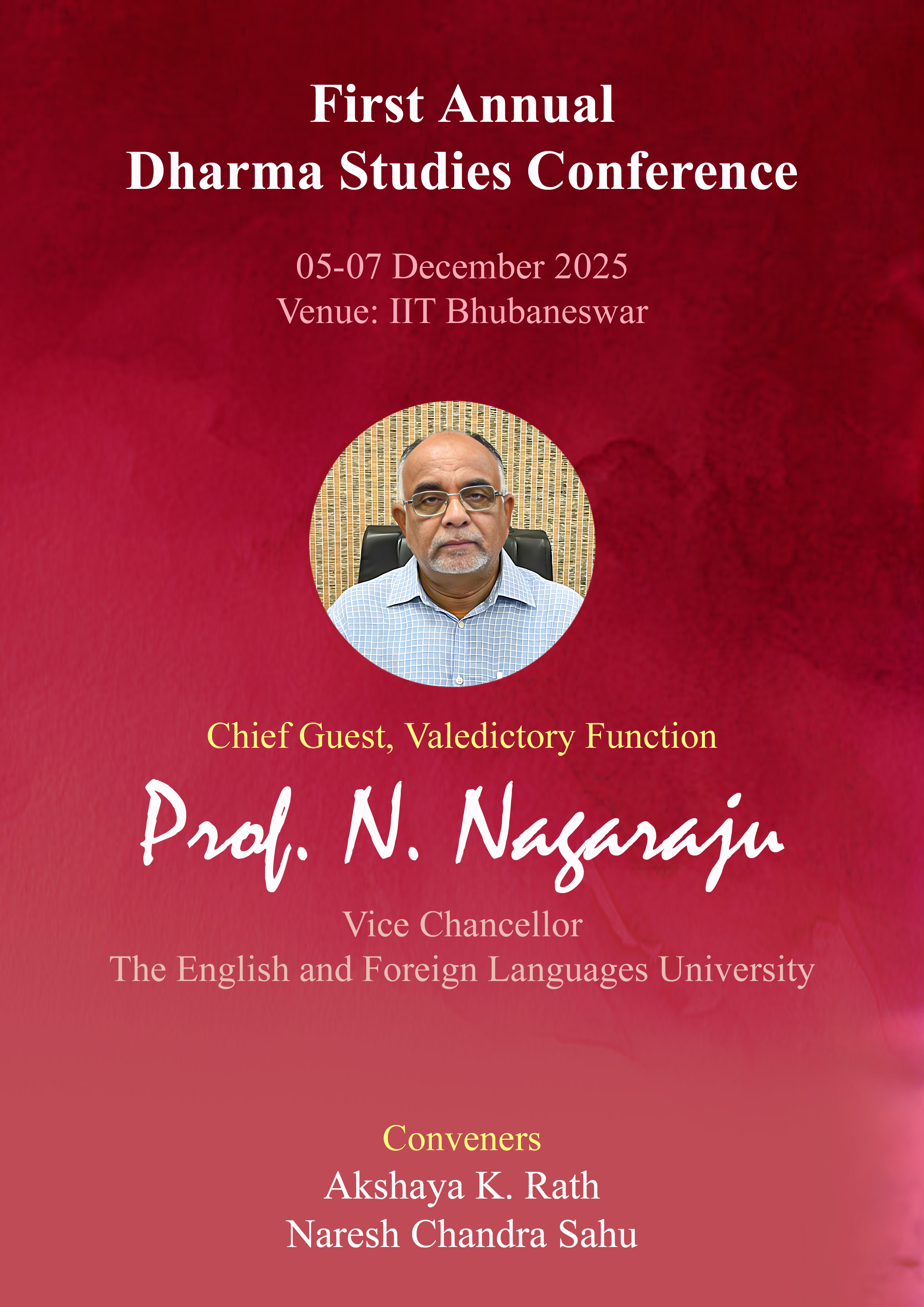
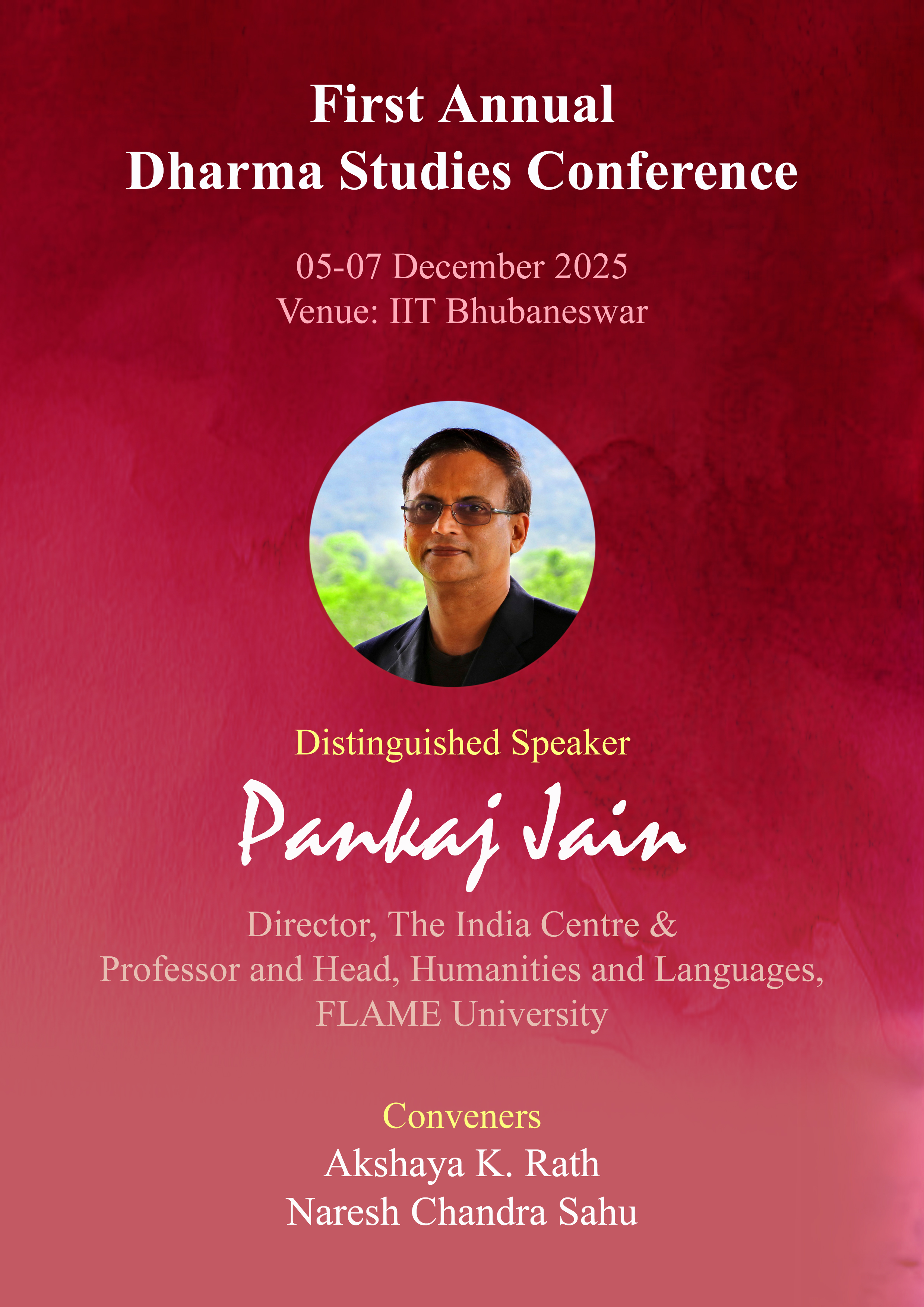
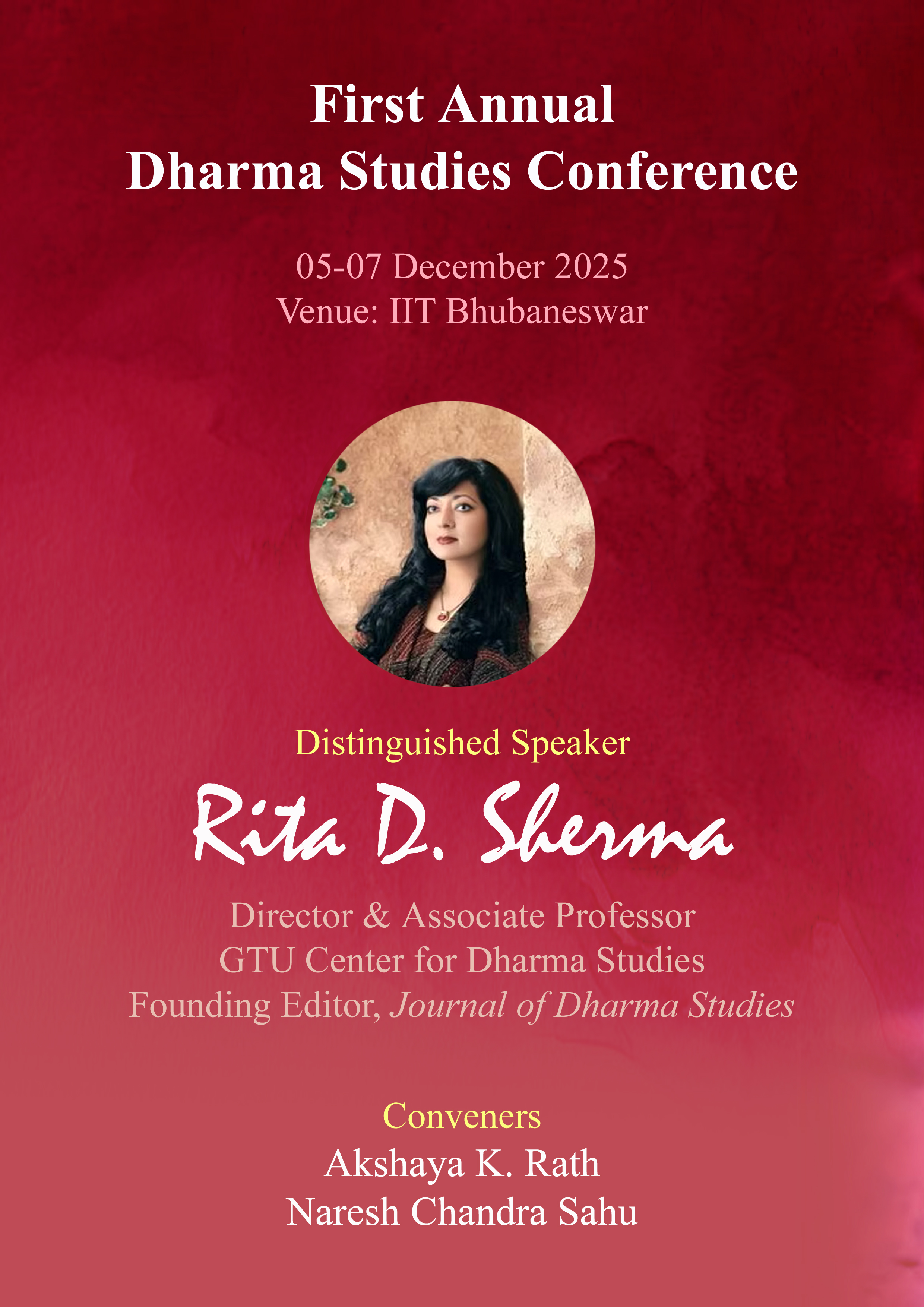
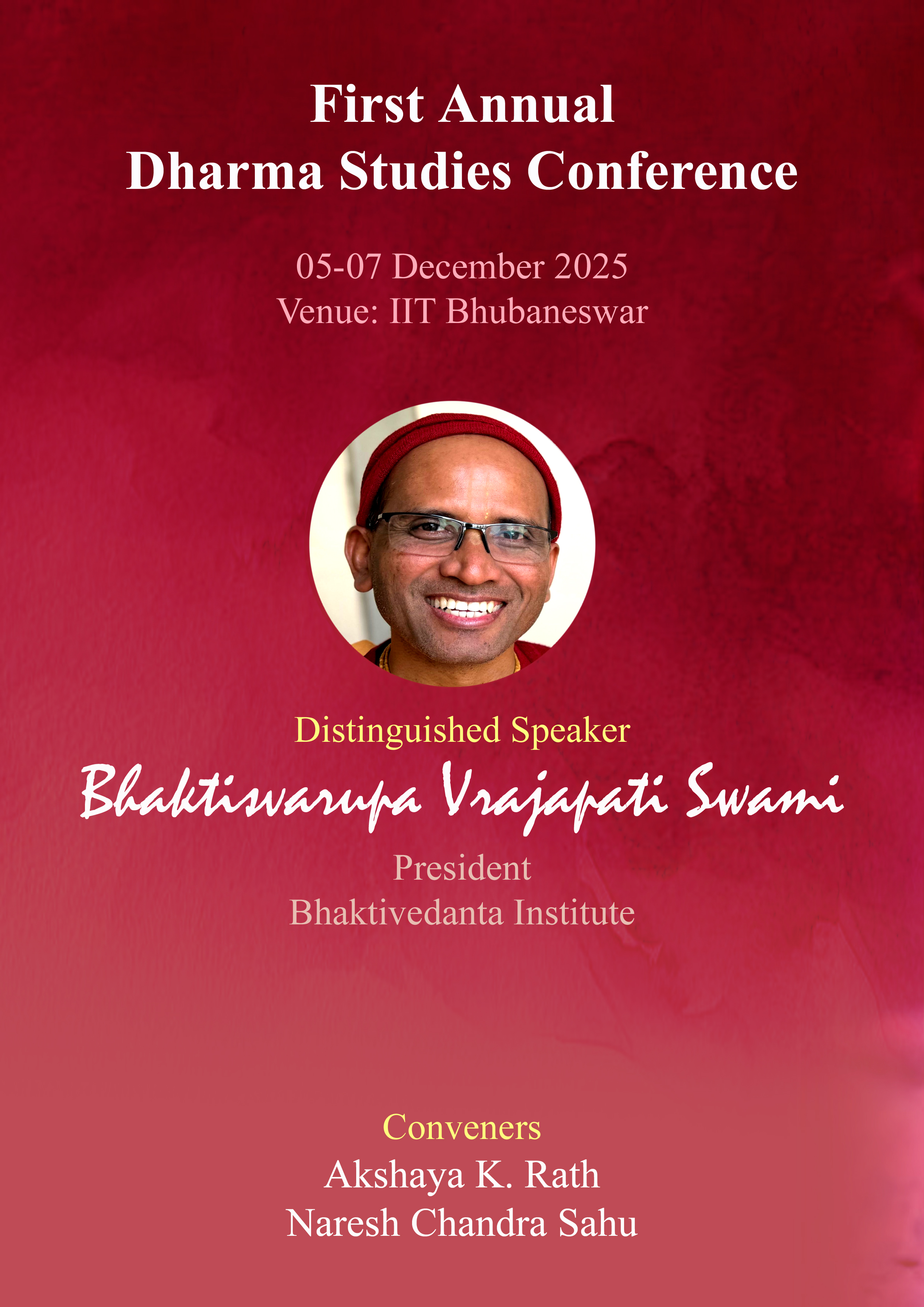
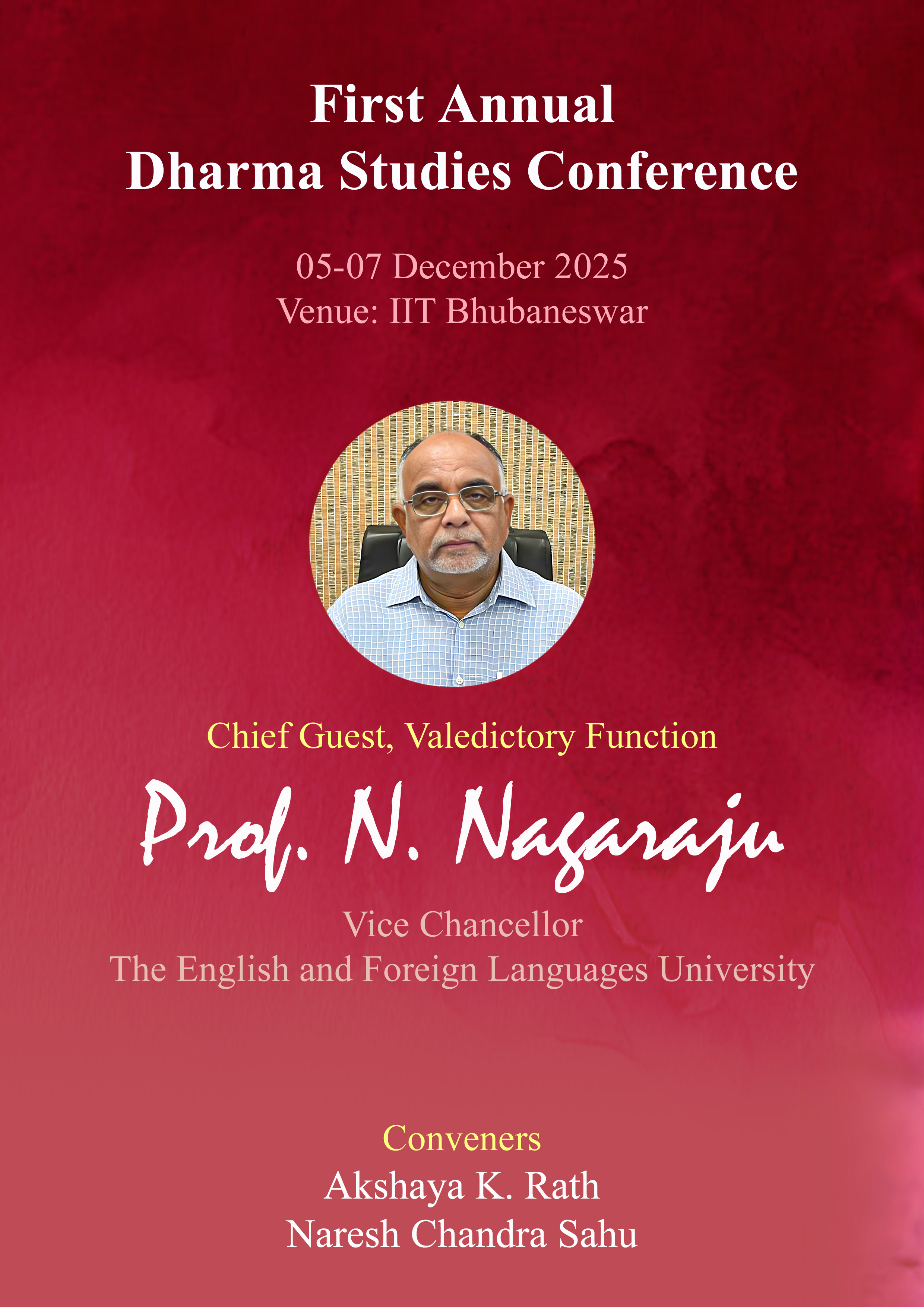
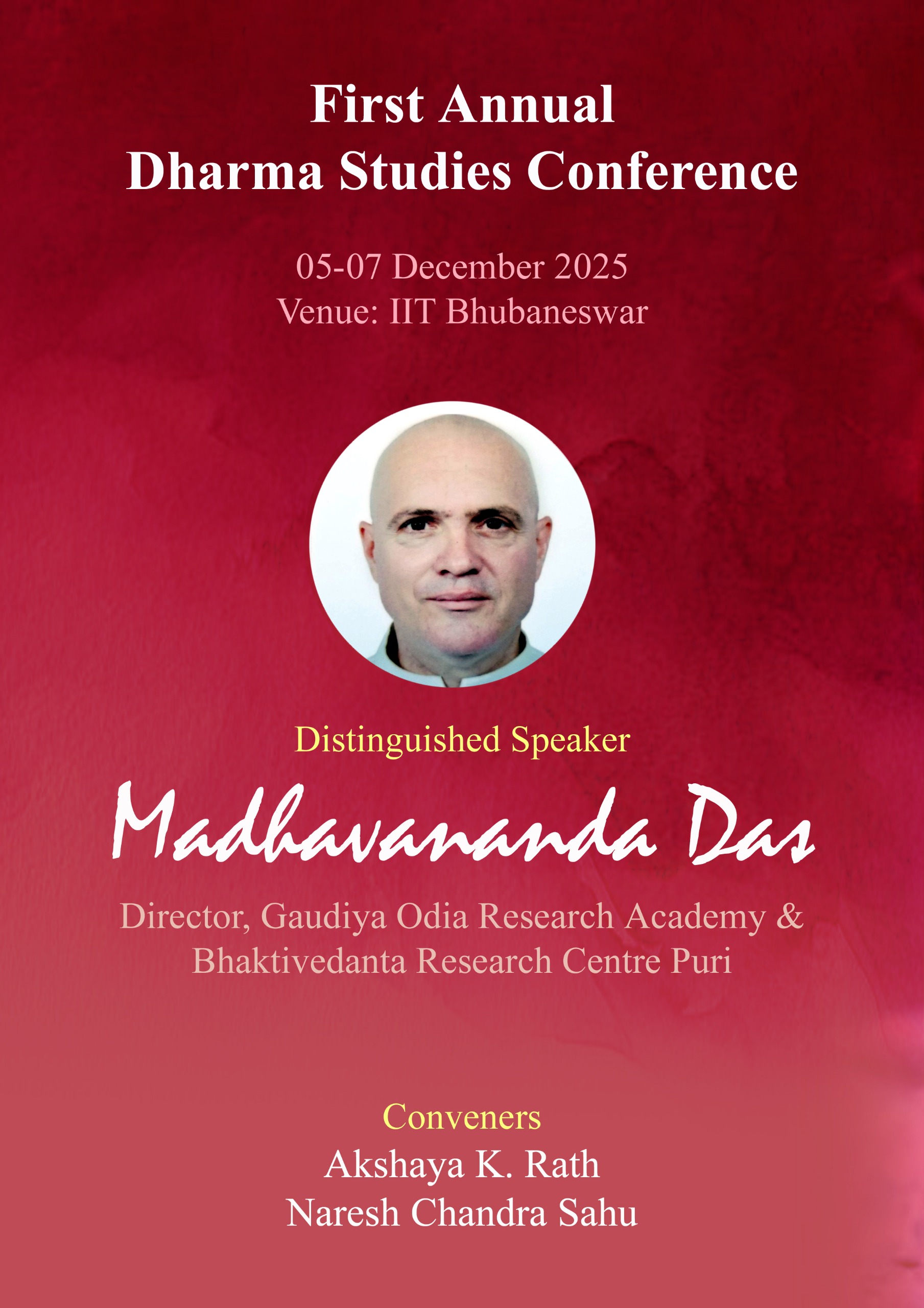
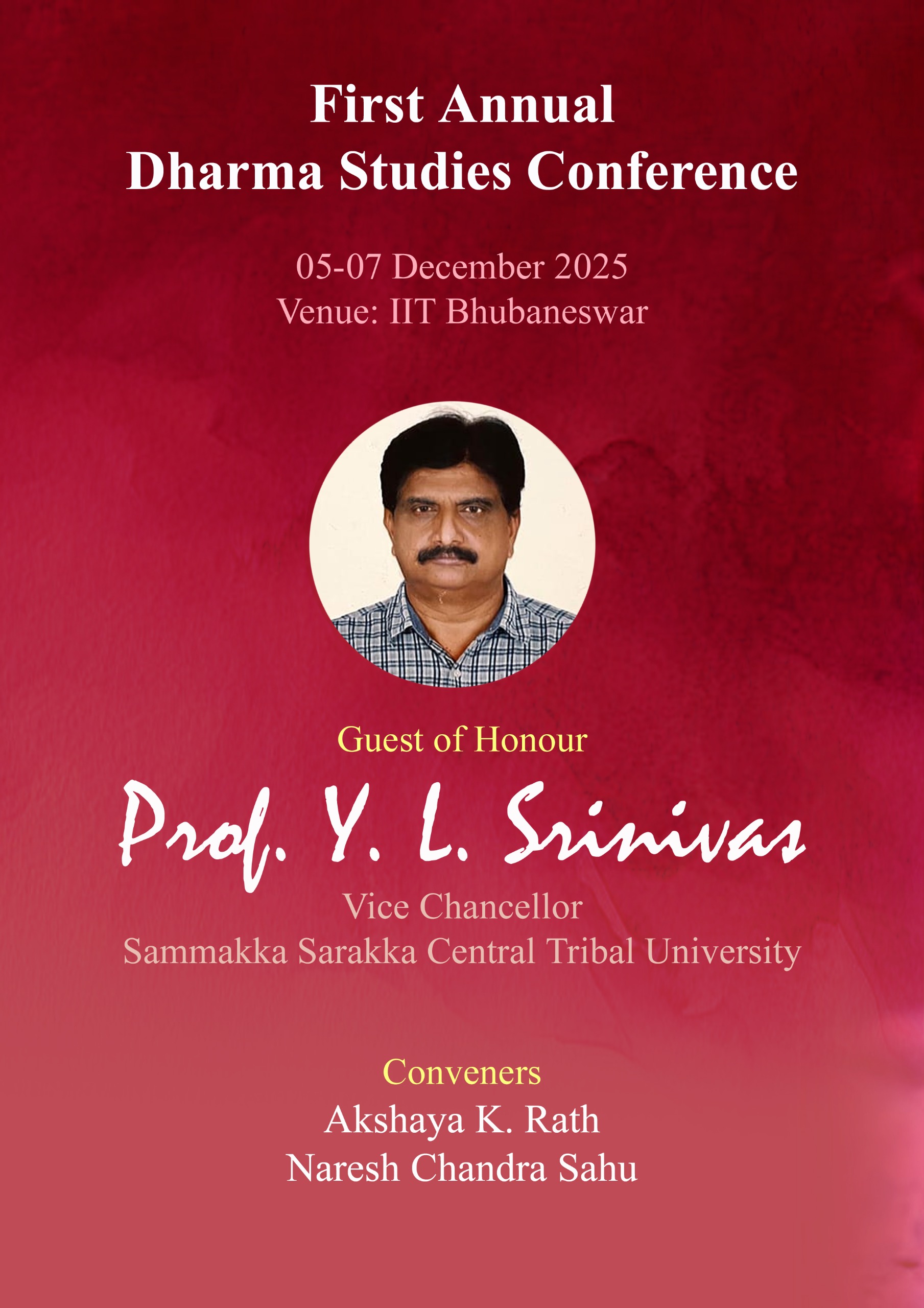
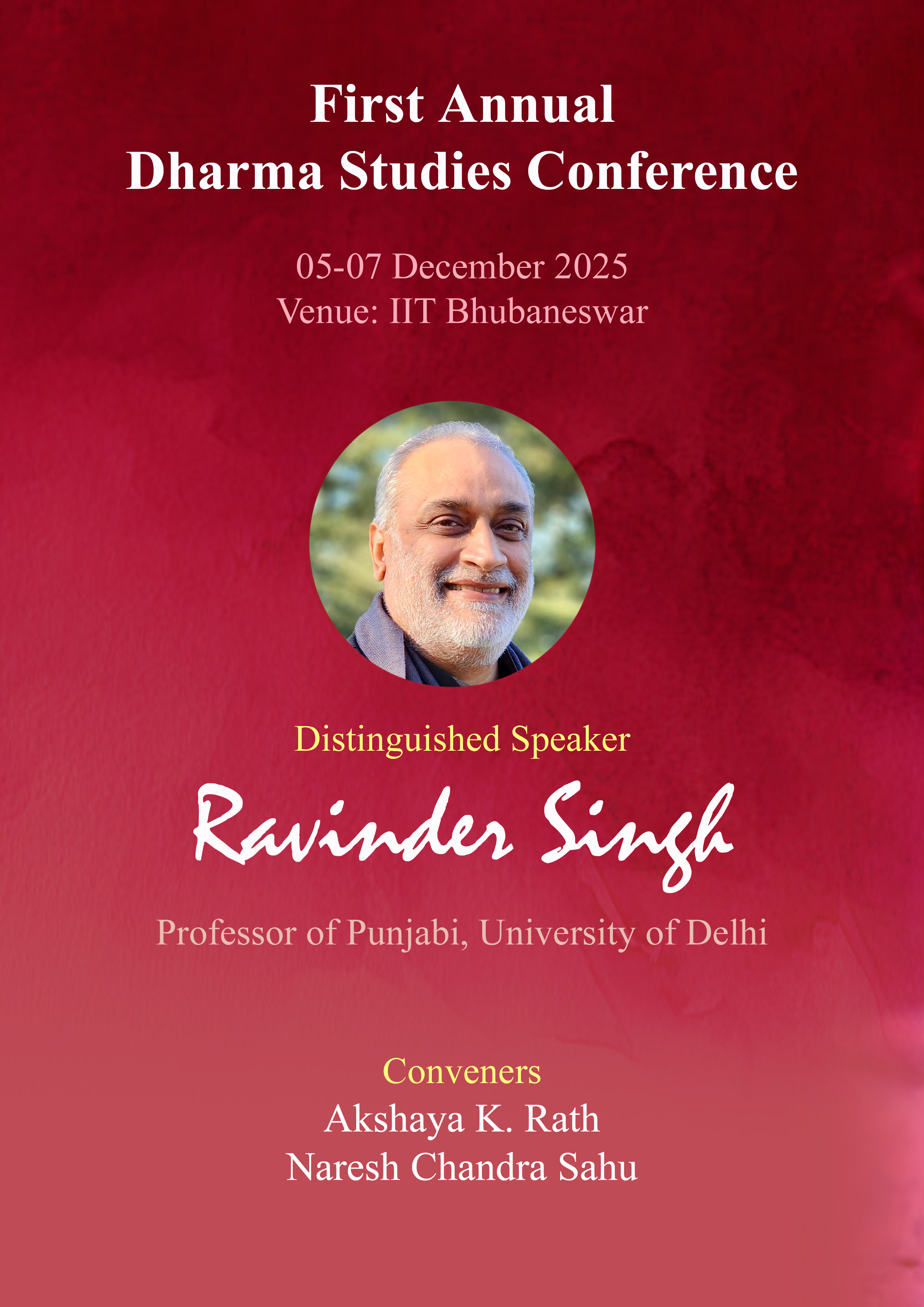
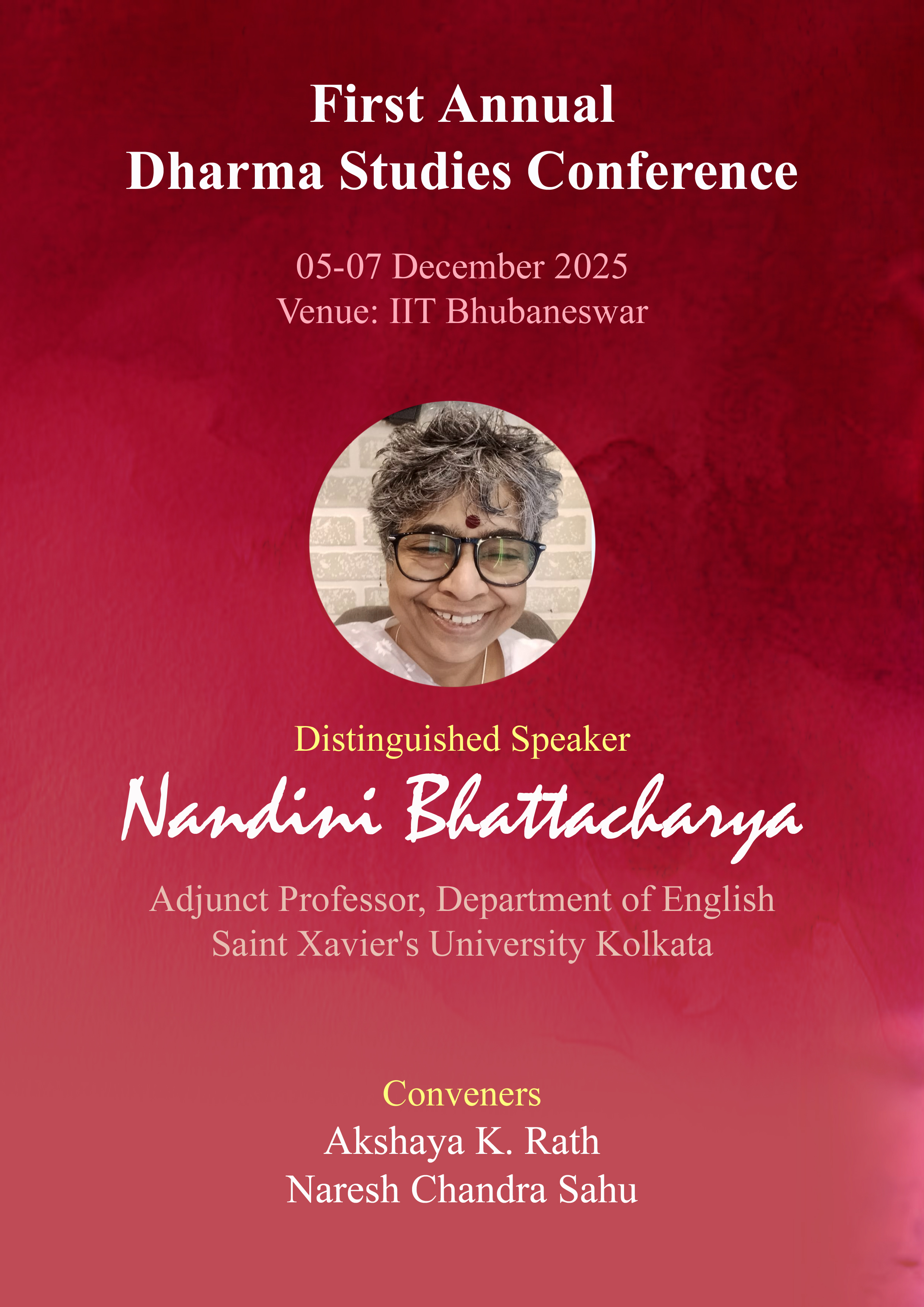
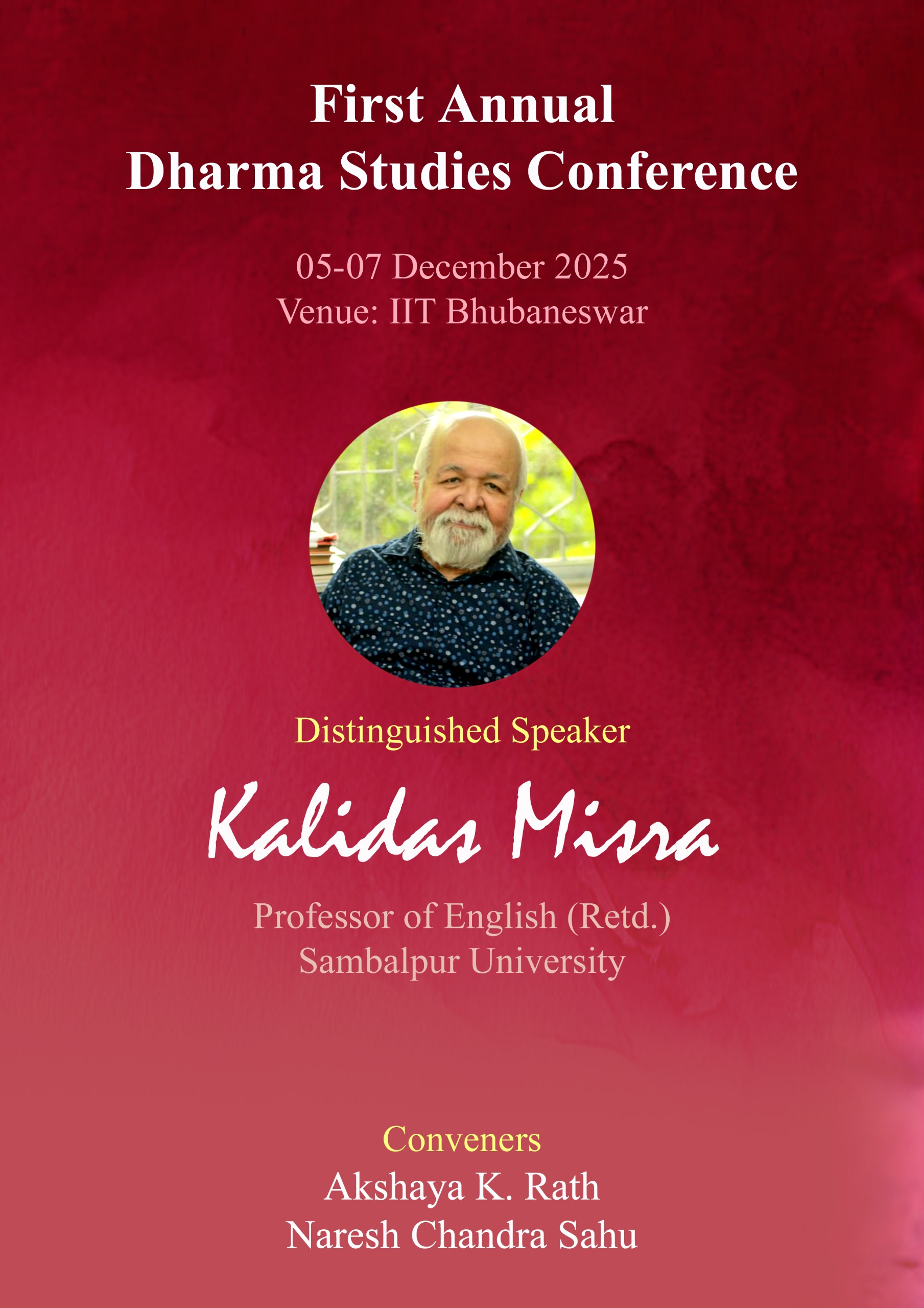
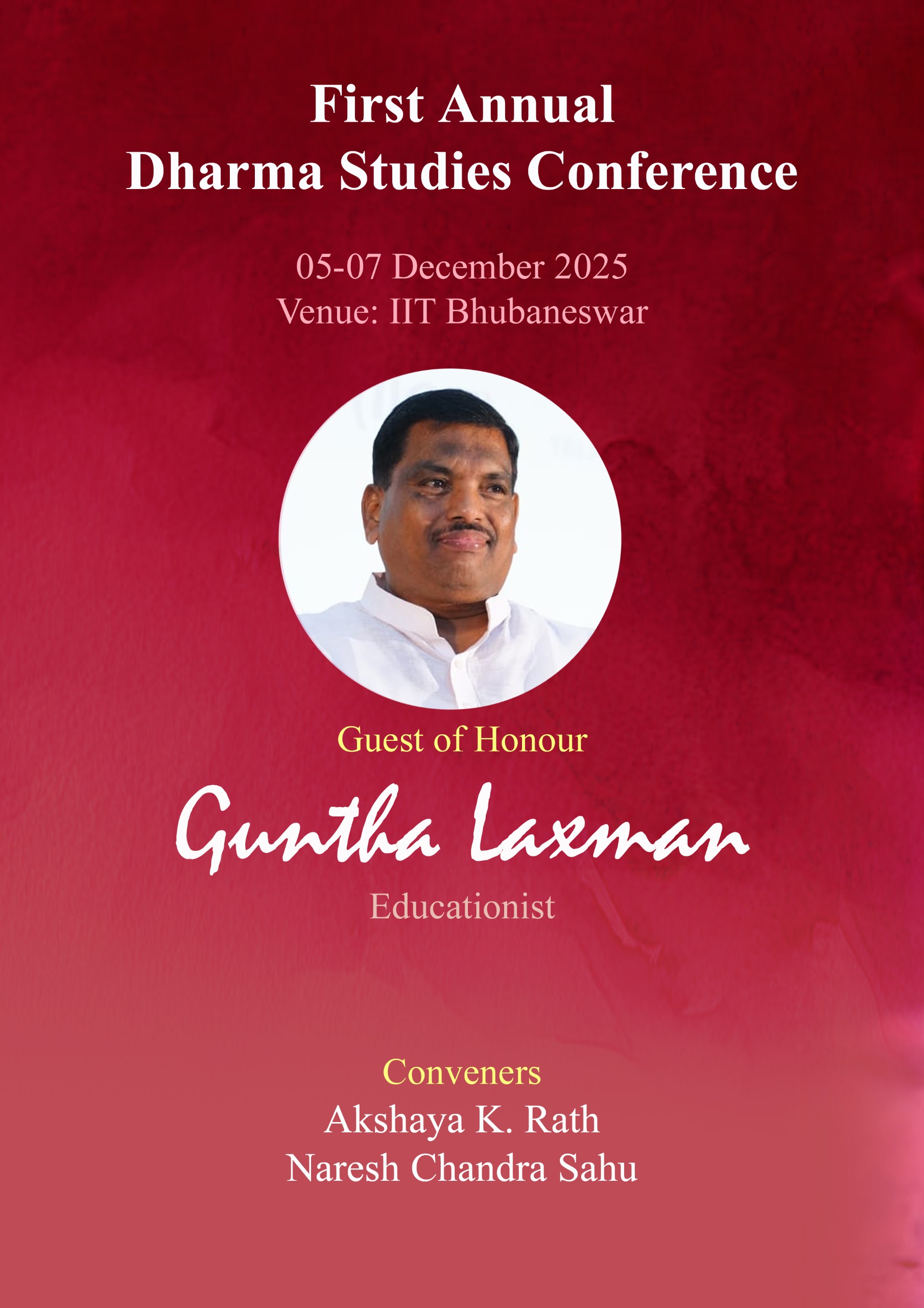
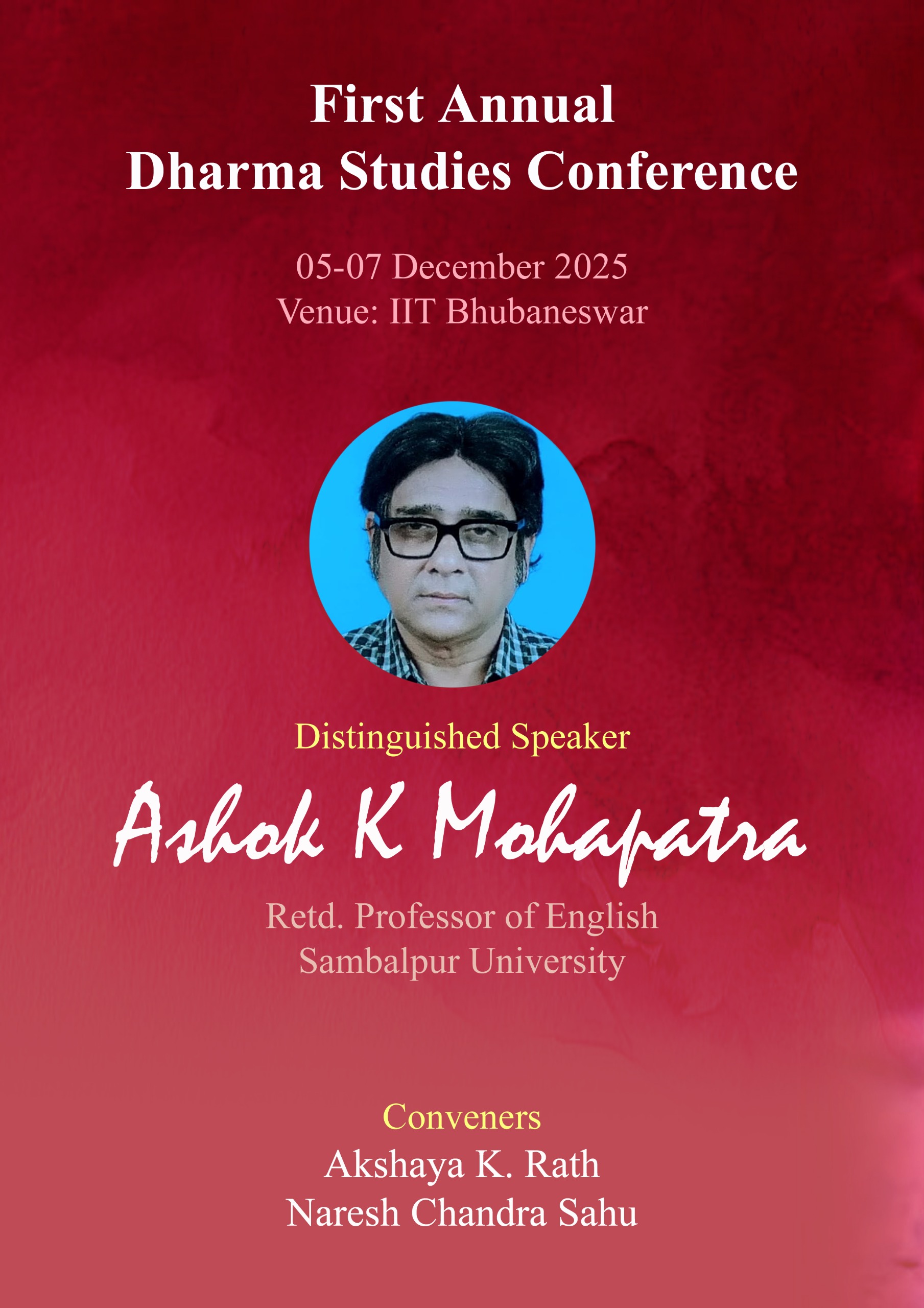
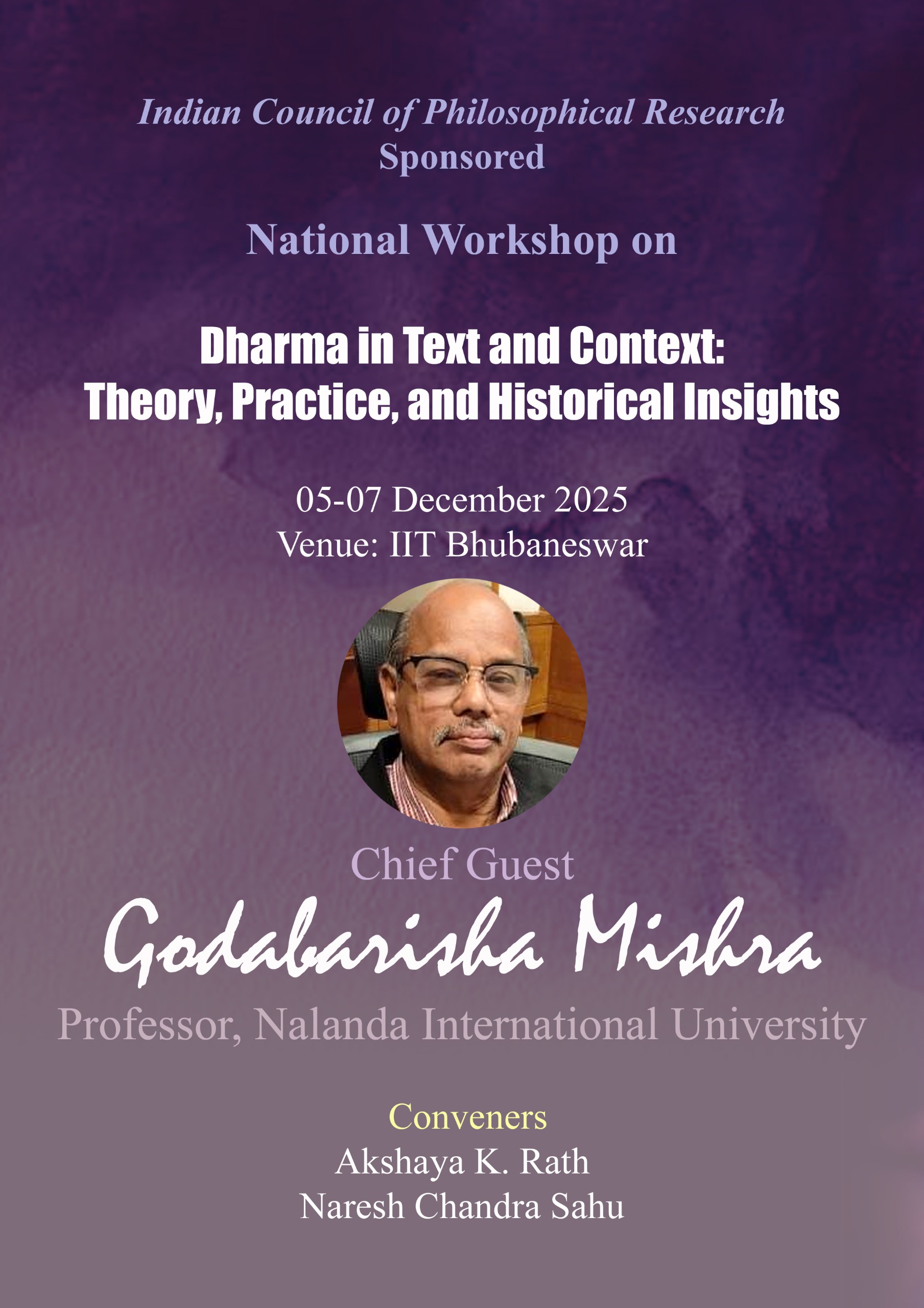
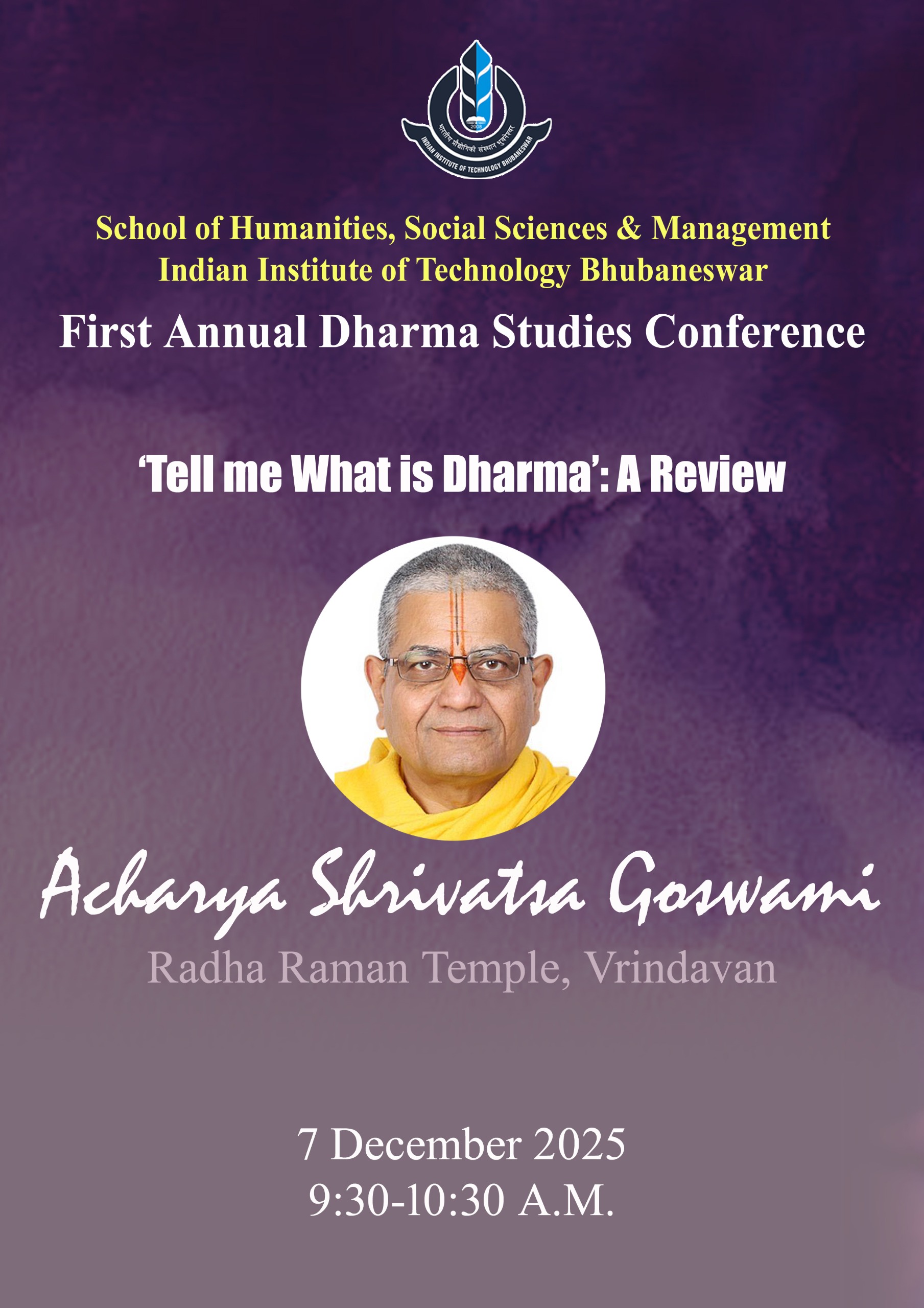
Confirmed Speakers
Travel & Logistics
Railway Station: Khurda Road (Code: KUR) [7 kms]
Railway Station: Bhubaneswar (Code: BBS) [31 kms]
Biju Patnaik International Airport (Code: BBI) [27 kms]
For further details (Location and Maps), visit https://www.iitbbs.ac.in/index.php/home/how-to-reach/
Places of Interest:
https://odishatourism.gov.in/content/tourism/en/discover/major-cities/bhubaneswar.html
Call for Papers
Please send your abstracts (about 300 words) and bio-notes (about 100 words) to dharmastudiesconference@gmail.com. The conference is particularly interested in early career and Ph.D. scholars in Indian academia. Exceptional proposals from MA students will also be considered. The last date for the submission of abstracts and bionote is 15 September 2025. Intimations will be sent to shortlisted candidates by 21 September 2025. The decision of the Organizing Committee will be final as regards the selection of abstracts.
Call for Panels
We invite panel proposals. Each panel should bring together three to four scholars who will present papers on different aspects of a chosen area. These scholars could be from the same disciplinary field. Alternately, they may also hail from different disciplines. Having said that, their presentations should have in common a particular area. They could reflect on their chosen area from diverse points of view in terms of their archives, methods, periods and the like. For instance, if a proposal chooses to focus on food history in dharmic traditions, the scholars on the panel will be expected to present papers on diverse textual archives of Hinduism or Jainism, to focus on different of periods such as the sixteenth or the twentieth century and employ various methods of analysis drawn from oral history or ethnography or macro-economics.
Partner Institutes
School of Humanities, Social Sciences & Management, IIT Bhubaneswar
Department of English, Banaras Hindu University
Department of Humanities and Social Sciences, IIT Roorkee
Sammakka Sarakka Central Tribal University
The India Centre, FLAME University
The English and Foreign Languages University Hyderabad
 |
|
 |
 |
 |
 |
 |
 |
 |
 |
 |
 |
 |
 |
 |
 |
 |
 |
 |
 |
 |
 |
 |
|
Executive Committee
Godabarisha Mishra, Nalanda University
Anamitra Basu, IIT Bhubaneswar
Ngamjahao Kipgen, IIT Guwahati
Rajakishore Nath, IIT Bombay
Sandeep Kaur, Central University of Punjab
S. Linga Murthy, Central University of Karnataka
Dillip Kumar Pattanayak, Central Institute of Buddhist Studies
Upender Gundala, The English and Foreign Languages University
Important Dates
Deadline for submission of abstracts: 15 September 2025
Intimation of acceptance: 21 September 2025
Deadline for registration: 28 September 2025
Registration Details
Delegates without accommodation: INR 2500/ OR USD 50
Delegates with in-campus guesthouse accommodation: (Faculty and independent researchers): INR 5500/ or USD 100 [This will include accommodation on a sharing basis at IITBBS or NISER guest house for three nights, conference kits, coffee and snacks at conference venue, conference lunch and special dinner.]
Delegates with in-campus hostel accommodation: (research scholars and students): INR 4000/ or USD 80 [This will include accommodation on a sharing basis at IITBBS hostels for three nights, conference kits, coffee and snacks at conference venue, conference lunch and special dinner.]
Delegates presenting online: INR 2000/ or USD 30
Registration Link: https://forms.gle/G6Z2GzKW52prnDqp6
Payment Link: https://payments.billdesk.com/bdcollect/bd/iitbhubaneswarresearchinternshipforfaculty/17195
Contact Us
For any information or query related to the conference, please email us at: dharmastudiesconference@gmail.com